
How to Break the “Glass Ceiling” on Allegro.pl: Advanced Growth Strategies
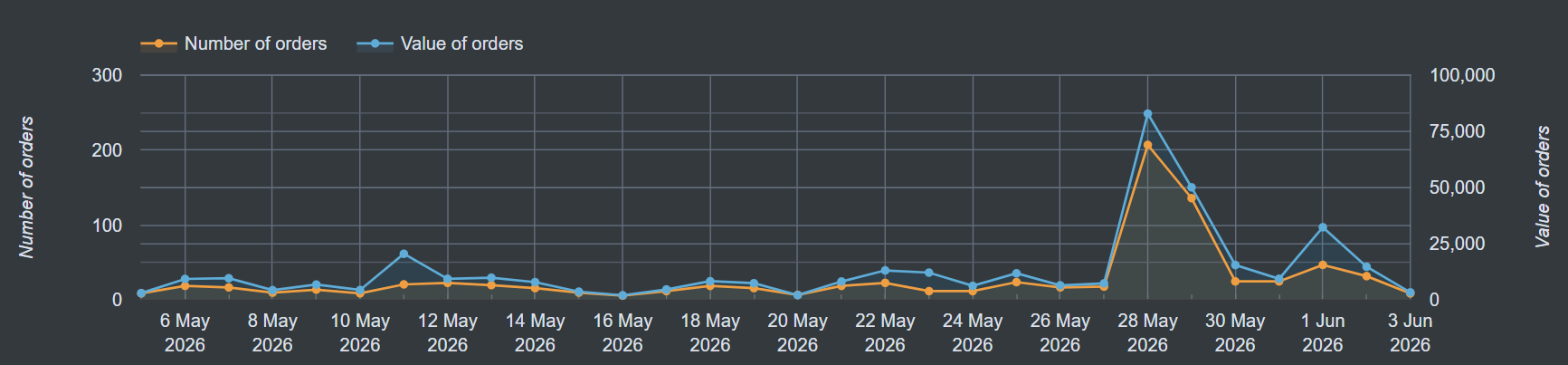
Sales growth on Allegro.pl frequently plateaus even after a company has fully optimized its Customer Experience (CX) metrics. A store may achieve an impeccable service rating, rapid fulfillment, a high recommendation rate, and well-structured product listings, yet find its turnover immobilized. At this stage, expanding the SKU portfolio or inflating internal advertising budgets yields no proportional returns.
This operational stagnation is classified as a glass ceiling. When standard operational excellence and baseline promotional tactics run out of steam, a structural shift in sales architecture is required. Below is an analytical breakdown of methods to overcome this barrier using algorithmic fine-tuning, advanced data utilization, and traffic diversification.
1. SEO 2.0: From Product Titles to Search Query Semantics
Basic title optimization carries a strict performance ceiling. To scale revenue deeply, a systematic, data-driven approach to search engine optimization is mandatory:
- Query Clustering: Developing a comprehensive semantic core using Allegro Analytics data. Titles and metadata must account for seasonal search fluctuations and adjacent user search patterns rather than just direct product naming.
- Mandatory and Extended Parameters: Allegro’s organic ranking algorithm (Trafność) prioritizes listings with the highest density of completed attributes. Omitting a unique EAN code or secondary brand characteristics systematically excludes the product from search results when buyers deploy granular user filters.
- Linguistic Localization: Relying on automated translation software degrades conversion rates. Product copy must be meticulously adapted to match the natural search perception of native speakers (for instance, utilizing the industry-standard term “neutralizator” instead of a literal, mechanical translation like “usuwacz zapachów”).
2. Allegro Ads Management and Traffic Allocation Constraints
Dependence on fully automated bidding strategies frequently results in inefficient capital allocation. Ad campaigns require precise manual segmentation: isolating a “Bestsellers” group (high budget allocation, tightly controlled CPC) from a “New Arrivals” category (elevated CPC to accelerate initial sales history accumulation). Concurrently, sellers must navigate the marketplace’s internal traffic distribution nuances.
Algorithmic Impression Caps (Traffic Throttling)
Unverified Industry Hypothesis: Within the professional community of high-turnover enterprise sellers, there is an ongoing consensus regarding the existence of hidden limits on daily or monthly ad impressions per account within specific product categories.
According to this hypothesis, once an account commands a specific share of voice or reaches a predetermined volume of visibility within a niche, the algorithm may temporarily de-prioritize its ad rotation. This redistributes impressions to other market participants to prevent niche monopolization and incentivize established sellers to migrate to high-tier premium ad formats (e.g., Reklama Graficzna) or further inflate baseline CPC bids.
Under these algorithmic constraints, scaling a standard campaign budget fails to drive incremental sales volume; instead, it merely inflates the Customer Acquisition Cost (CAC).
3. External SMM Traffic as a Long-Term Organic Catalyst
When internal promotional tools hit diminishing returns due to platform-enforced caps, driving external traffic from social media channels (Facebook, Instagram, TikTok, Pinterest) becomes the primary lever for scaling. This strategy generates a highly lucrative cumulative effect on internal Allegro account metrics.
1. Manipulating the Organic Ranking Engine (Trafność)
Allegro’s organic search algorithm evaluates listings primarily on two metrics: sales velocity and Conversion Rate (CR). Social media campaigns funnel targeted, pre-warmed audiences with a high pre-existing purchase intent directly to the listing. The resulting surge in CR is flagged by the platform as an indicator of exceptional product relevance, structurally elevating the listing’s position in organic search results for internal marketplace users.
2. Eliminating Competitive Pressure
A consumer arriving via a direct hyperlink from an external social media campaign lands exclusively on the specified product detail page, completely bypassing the marketplace’s main search bar. This effectively insulates the audience from competing ad placements during the critical conversion stage.
3. Compounding Listing Equity
Every transaction initiated via external acquisition permanently strengthens long-term organic ranking factors:
- Accelerates the accumulation of verified Product Reviews, reinforcing vital social proof.
- Spurs “Add to Favorites” (Ulubione) actions, which the search crawler interprets as a strong positive signal.
- Locks the listing into the user’s browsing history, enabling Allegro’s internal retargeting engines and automated email newsletters to re-engage the consumer at zero additional cost to the seller.
4. Transitioning to Branded Demand
A structured, systemic social media presence shifts user behavior over time. Instead of searching for a generic category (e.g., “neutralizator zapachów”), Polish buyers begin entering the proprietary brand name directly into the Allegro search bar. Branded traffic yields the highest baseline conversion rates and remains completely insulated from competitor conquesting campaigns.
4. Operational Process Optimization (BaseLinker & Zapier)
Growth barriers are frequently rooted in operational deficits rather than marketing limitations. Delays in order processing, stock synchronization lag, and prolonged fulfillment times systematically degrade the customer experience, lowering the seller’s internal quality score and suppressing search visibility.
- Channel Centralization via BaseLinker: Integrating all sales channels into a unified interface and automating waybill generation, invoicing, and real-time order status updates reduces manual processing overhead by up to 70%.
- Workflow Automation via Zapier: Establishing automated data bridges between the marketplace, internal CRM/ERP infrastructure, and analytical sheets ensures flawless quality control across all fulfillment touchpoints. This operational stability is critical for securing and maintaining the prestigious Super Sprzedawca (Super Seller) status.
Summary
Overcoming an operational and algorithmic sales plateau requires transitioning from fragmented listing adjustments to a comprehensive, systemic audit. When internal Allegro Ads campaigns exhibit diminishing marginal returns, scaling efforts must be reallocated toward external acquisition channels.
Deep search optimization backed by precise linguistic localization, robust operational automation via BaseLinker, and targeted external SMM traffic diversification allow enterprises to mitigate platform-specific risks while optimizing internal marketplace metrics to unlock sustained, long-term organic growth.